
Tuesday, January 01, 2008
Graphic Novel Review: The Blog of War
 (Review of Dan Goldman and Anthony Lappe, Shooting War, November 2007)
One of the most buzzed online web comics of the year finally got a hard copy release this side of the pond last month. It's called Shooting War, and it's made waves over at Smithmag.net since May 2006, when uber-Geek (that's hard ware and binary, not math rock and horn rims) bloggers Boing Boing blew the roof off it with a throw away casual link. It threads terrain typical of graphic novels, reaching into a future dystopia to stick some allegories about the present up our ass for awkward digestion.
The setting this time round is a 2011 Iraq, sectarian tensions are spilling into overdrive, rumors of an Iranian invasion from the south abound and President McCain's only exit strategy is a re-alignment with what's left of his old friends in Saddam's Baathist party. There's a My Lai massacre a minute, a McDonalds on every block and mortars are raining down on what's left of the Green Zone like it was Saigon '75.
Enter Jimmy Burns to the fray. He's your penny dreadful Brooklyn blogger churning out anti-corporate rants all over the east coast but has no mass movement market to hitch his ride to. One day he's doing a story on the new enclosures brought about by eminent domain. It's a nasty piece of legislation allowing re-distribution of your property to corporations that find a more productive use. Next thing a terrorist bomb goes off in a Starbucks behind him and he's got the exclusive.
Suddenly stuck for footage, mega media bad guys Globalnews steal his video blog feed, turning him into an insta-celebrity and selling him to the world like a new brand of toothpaste. Forced to dance a line between his DIY journalism and corporate cash, he's shipped to Iraq as one of only four American war correspondent's left there.
It's nothing but a slight stretch to guess the novel comes from the direct experience of Lappe. The blokes traveled to the Middle East several times on assignment and produced Battleground: 21 Days on the Empire's Edge, picking up some awards for it along the way. Alongside this peeled back re-imagining of his own jaunt through bombed out Baghdad, there's visual gimmicks and vocab from activist sub cultures for a sprinkling of further credibility from his years with the Guerrilla News Network.
The comic panels are a combination of drawings and photographs, some look like they've been automatically fed through a few Photoshop filters, and there's a neat stylistic use of web feed uploads and network TV graphics framing pages. Anything from a soldiers perspective angles at you like the screen of a first person shooter.
It's in imagining the incidentals of future war and the political props of our own evolving dystopia that Shooting War rocks most. There's the jihad group that's cornering the call centre market with its throat cutting labour standards and the use of a dirty bomb to neutralise competition in the hi-tech squalor of Bangalore. Their leader, a maniacal Guevara stereotype bent on the Koran, delivers standout Bond villain lines to steal the show: “we are the Sword of Mohamed. We are not some sons of rich men hiding in caves and releasing videos to the internet like 13 year old girls.”
Back home a video game called Infidel Massacre rises up the charts, both a manual for terrorism and a sharp riposte to military recruiting freebies like today's real America's Army. The US military has harnessed civilian technologies and next gen consoles to exploit skilled self-trained gamers that control robotic gun-bots engaged in asymmetric warfare straight out of one of Mike Davis' urban terror-scapes.
Sadly Burns becomes completely divorced from his inception as the netizen every-man, used by mainstream news networks with faces battered from the blogging storm. He takes on this paper cut out April O'Neil as Naomi Klein routine that starts to grate.
Much will be made of the novel's politics of the media. Really the authors pass up poking around at the consequences of Web 2.0. If you are going to name check Negri for kudos, then picking at the immaterial slavery of uploaders and bloggers generating free content in wageless legions for major players in the media market might be a thought.
At heart there's just a raging cynicism dying to be proved wrong for once. The shits and giggles come from predictable across the board ironies, its all a flue of outraged liberal steam before the story arc can end with a final affirmation that our governance by a capitalism with the personality of "Godzilla on crank" really is just an issue of a few bad men. In that way its quite like Brian Wood's Jenny One series - Shooting War shares his concern with the media but in a much more disturbingly plausible mode.
In comic book land it'll never end up a classic like Marjane Satrapi's Persepolis or more obviously Joe Sacco's brilliant account of his photo journalism in Palestine. That said, with history unfolding on our screens, context free and maybe, just maybe, sometimes analyzed with tones reserved for a Britney Spears outburst - Shooting War nicely drops us in boiling pots of speculation for the crime of complacency.Ye can check it out online at shootingwar.com and this A.D: New Orleans After the Deluge might be worth a gawk. This article was originally destined for the Village.ie website.
Labels: Class Fictions, fiction, graphic novel, Literature, Warrior Dubz
(0) comments
Sunday, December 09, 2007
Eye Candy: Hey Apathy!
 Hey Apathy is a comic series by Toronto based street influenced graphic artist Mike Parsons, some of his larger pieces were on display today just off College St. Some of these he'd drawn doing that on street painting-as-busking thing you see going on. Remember those children's search books Where's Wally? Well imagine one of the characteristic crowd scenes rendered in black ink, over 12 foot in length and bursting with a frenzied energy and paranoid pressure.
Parson's work is churned out at a ruthless rate, he doesn't stop himself to cover mistakes and his obsession with the anonymity of crowds is a running theme of distaste throughout his larger canvases. Some of the images are similar to rushed HR Geiger rip offs, in one panel the shrill squawk of mobile phones becomes unbearable in a queue until the neural systems of their users burst through their skulls and drag the phones back into the central nervous system.
Parsons work is that feeling of standing in a major city and staring with your neck creaked up at the structures above you, built by us but dwarfing us with that pain of city isolation and social inadequacy too. I don't suspect the bloke is much of a humanist, but if you like those Dystopia cartoons that appear in Totally Dublin - then you might want to check him out.
Labels: cartoons, comics, eye candy, graphic novel, Literature
(0) comments
Friday, December 07, 2007
Bolivia: Social Movements On Fire.
 Over the weekend of November 24-25th, protesters clashed with police in Sucre, Bolivia - they were demanding that the capital of be moved there. Three people died and over some 100 were wounded in the clashes. Yesterday Morales announced plans for a nationwide referendum to resolve a deepening political crisis in the country. A few months ago, two recent works on Bolivia were given a look over for the WSM's Red and Black Revoltuion 14, the review appeared on Indymedia.ie first and here it is for you blog readers
A few years ago the Cochabamba water war coincided perfectly with the 2000 anti-globalisation peak to solidify many of that movement's arguments about neo-liberal rule in cold hard scenarios of struggle. An exciting new round of images depicting indigenous women confronting militarised police dotted left publications, while documentaries like 'The Corporation' used the revolt as a sharp anecdote in hacking off the avaricious tentacles of multinationals.
A review of "The Price of Fire" by Ben Dangl and "Impasse In Bolivia" by Benjamin Kohl and Linda Farthing.
With the success of the Movimiento al Socialismo (1), western attention moved from the social movements honed in such resource struggles to the left caudillo Morales and, despite previous excited flutters, there's now little comment on how the grassroots relate to this new moment.
Al Giordano complained in a recent book on Oaxacca, that the radical press often shares problems with the mainstream - reeling in a journalism of instant replays, full of heroic and tragic moments from the barricades, instead of cogent analysis.
Thankfully in the past six months two very different books sought to pierce through the frailty of movement reportage on social movements in Bolivia, to explore why they emerged with such force since the 1990's and how they now relate to the MAS.
The first of these is Kohl and Farthing's 'Impasse in Bolivia', a heavily wrought background to the face off between a globally prescribed neo-liberal hegemony and a local population repeatedly drawing on a five hundred year resistance narrative.
Taking the reader through a well-elucidated history from the Spanish Conquest to the early 21st Century, they track how economic restructurings affected the composition of Bolivian resistance movements prior to neo-liberalism.
The exploitation of silver deposits at Potosi by the Spanish profoundly re-organised Andean society, leading to the emergence of indigenous resistance through nested kinship structures that fuelled rebellions such as the mythic 1781 siege of La Paz from the alti-plano by tens of thousands of Aymara warriors.
The authors describe how the later drive for an independent Bolivia stemmed from liberal criollos keen for the benefits of their own state but bent on uprooting and modernising indigenous communal land-holding systems to fundamentally exclude them as citizens.
The eventual replacement of these hacienda based elites with natural resource companies at state level set the ground for embryonic industrial agitation and ripples that reach the present.
In the thirties a rivalry between Standard Oil and Royal Dutch Shell over control of deposits in the Chaco region forced Bolivia into a proxy war with Paraguay for control of the disputed area. Defeat both drastically reduced the country's land mass and welded the social force for the 1952 Revolution among war weary drafted students, workers and campesinos.
The resultant Movimineto Nacional Revolucionaro deposed the mining oligarchies with a regime subject to land and labour pressure from below in the form of the Confederacion Obera Bolivian. Forced to recognise land seizures and labour demands, it constructed a state in the modernist nationalist tradition with a strong central administration and control over natural resources.
This defiant union movement continued to push for a deepening of citizenship rights only to be marshalled with a military dictatorship in 1964 as Cold War realities hit home.
The imposition of neo-liberal economics in the eighties under the NEP against this historic background becomes quite central to the authors' account, seen as a serious attack both on what became known as the "State of '52" and the labour movement.
Engineered for president Estenssoro by Jeffery Sachs of the IMF, it was the first programme of its kind, leading to some economic recovery in the face of hyper-inflation but an ensuing human misery.
Over 20,000 miners lost their jobs, manufacturing collapsed and over two thirds of the urban population were dragged into the informal economy, dramatically paralysing the COB as the backbone to popular struggles.
With the way paved for an affirmation of neo-liberal policies, Gonzalo Sanchez de Lozada's Plan de Todos in the nineties unfolded with the familiar theme of privatised state owned enterprises, gutting the country's revenue.
Yet according to the authors, the couching of this new market democracy in electoral and social reforms inadvertently opened a space for indigenous resistance in rural areas.
As failed neo-liberal promises bolstered anger, diverse movements around coca eradication in Chapare, land rights and basic urban services quickly transformed the political landscape to "forge a common sense of injured national identity (2)."
Unfortunately Kohl and Farthing's work is hamstrung with the distance of academia, it sketches the imposition of neo-liberalism brilliantly but fails to illustrate "the shape that popular challenges to it will take (3)" in any grounded way.
Using a very different approach Benjamin Dangl's 'The Price Of Fire' is refreshingly intimate, he too starts with a "revolution in reverse," rolling through the tides of Bolivian revolt during a brief stay in old Potosi.
His writing style is steeped in hauntology and the psychic scars of centuries of exploitation; it's the fruit of bar room conversations, pickets and blockades and a brief encounter with Morales. He cushions this in minor analysis and travelogue, allowing voices from social movements to provide a "human face to the looting and struggles of a continent (4)."
During a visit to the Chapare, this "bearded gringo with a notepad" rails against the use of coca eradication as a paltry excuse for US intervention in the post cold-war climate, arguing that the migration of unemployed miners to rural areas accelerated coca's growth as the only viable cash crop under neo-liberalism.
From this dynamic the MAS emerged, capable of unifying different strands of struggle with its origins in coca growers' unions formed by former miners. Visually this is seen in the use of the coca leaf as party insignia, once used for energy by silver miners but equally evocative of indigenous and anti-imperialist messages today.
The book continuously traces how modes of militancy spread through migration. Like Farthing and Kohl, he agrees that the water war was a momentous turning point with the practice of mass assemblies in rural areas becoming more engrained in cities through the Coordinadora.
Retaining a critical eye, he doesn't rush to romanticise the end result of the water war. Bechtel may have left but the public water company is still controlled by a local political elite, though one more subject to street based popular power.
The question of how to use Bolivian gas further unified traditionally diverse social movements in the 2003 gas war to reverse the privatisation carried out in the mid-nineties. Protesters used "the wealth underground" as a point of correction for past lost resources and to envision a future of possible development, education and health-care.
Casting his eye to Caracas, Dangl hints at the use of oil revenue in Venezuela to empower the nation's poor with literacy programmes, health clinics and community centres as a path for the Morales regime.
'The Price of Fire' takes a brief jaunt into urban geography in a chapter on the internal world of the El Alto, a city whose residents played a crucial role in the 2003 gas revolt. The same social forces that drove miners to become cocaleros in rural Chapare led to the informal settlements outside La Paz skyrocketing to a population of 800,000.
Neighbourhood organisations sufficiently ingrained to strangle the capital below in periods of struggle, sprung up based on the experience of miner and rural agitation, as well as the absence of basic state services. One of the few academics Dangl speaks with describes their strength as lying in "the basic self-organisation that fills every pore of the society and has made superfluous many forms of representation (5)."
Within these El Alto urban movements we are given glimpses of a counter-cultural response to neo-liberal hegemony in Teatro Trono, a theatre group meshing struggles against the IMF with traditional myths in popular education programmes. There's also a growing hip-hop movement that fuses the Aymara language with sampled stateside beats into a poetics of urban resistance to poverty.
In his conclusion Dangl takes a critical look at the problem fraught Morales' regime. He claims that images of troops entering gas fields from afar look like the stuff of radical expropriation but nationalisation really meant a series of buy outs of majority stakes sold for a pittance in the 1990s, higher taxes and a re-negotiation of over generous contracts.
Stepping aside from the flurry of rhetoric surrounding nationalisation, the YPFB in reality still remains at a capital disadvantage with international companies holding minority shares.
Rarely mentioned in discussions of Bolivian social movements is the traditional demand for a constituent assembly convoked by Morales this year. Many of the movement activists we meet through Dangl's travels complain that the electoral nature of the assembly excludes them, forcing them to abandon their autonomy and seek representation through the MAS party.
Simultaneously it has reinvigorated right wing parties weakened by the popular rebellions, allowing them the space to develop a dangerous language of autonomy for oligarchical strong holds like Santa Cruz.
If you are looking for long streams of statistics on Bolivia's immiseration, then Farthing and Kohl have compiled a resource for your agitational pot-shots and filler articles - but if you want the human face of Bolivia's social movement push, then Dangl is your only man.
Whichever you prefer, Bolivia remains a fertile soil for the rebellious imagination, full of "better worlds- some that have lasted and some no more than euphoric glimpses (6)."
(1) Movimiento al Socialismo (Movement Towards Socialism) is the party of Evo Morales.
(2) Kohl, Benjamin and Linda C. Farthing. Impasse in Bolivia: Neoliberal Hegemony and Popular Resistance (Zed Books, 2006) p175
(3) Ibid p23
(4) Dangl, Benjamin. The Price of Fire: Resource Wars and Social Movements in Boliva (AK Press, 2007) p11
(5) Ibid p151
(6) Ibid p9
Check out Upsidedownworld for an analysis of the latest tensions.
Labels: Bolivia, Literature, Politics, South America
(0) comments
Tuesday, November 20, 2007
Book Review: The Rebel Sell
 Joseph Heath and Andrew Potter The Rebel Sell: Why the Culture Can’t Be Jammed (Harper Collins, 2004)
The Rebel Sell authors set themselves the task of attacking an idea of counter culture they see at the heart of social movements, so is that why the cover has a summit protester in gun sight?
Potter and Heath are right that counter cultural rebellion can sometimes suck energy away from making "concrete improvements in people's lives," providing excuses for not engaging mass society but their counter cultural imagination is limited to MTV, Adbusters, a host of mainstream Hollywood movies, the authors' own dashed ex-punk background, Kurt Cobain 's suicide notes and anything mall rat in between.
Despite their stated central preoccupation they ignore well articulated differences between “sub cultures” and “counter cultures.” You see sub cultures hang under the mainstream's belly, dependent on it and lacking a real critique. Counter cultures at least try to foster alternative values and ways of being to replace a dominant culture - so one contains at least some revolutionary purpose, the other doesn't. This failure to distinguish gives the authors an easy job of ripping into a series of piss poor straw men.
There is no discussion of the very real and needed role of counter cultural forms in political movements. How could they have overlooked the IWW's folk song tradition, the working man's clubs of the UK and Ireland or the foot ball leagues and community groups of pre-Nazi German social democracy - were these too just "pseudo rebellions" to be ignored?
Alongside historic blind sight, they completely skip the well trod over subjective reasons for engagement in counter cultures. Still note how an awful lot of school yard bullying stopped once they and their nerdy friends went punk. Counter cultures can be a very ordinary thing, a form of self defence or demarcation of space. Think of struggles around silly work uniform rules or piss ant fussy supervisors having their authority eroded by a shop floor black humor.
Really the book does contain some great pop culture writing, but the attempt to weave it into a general theory of counter culture falls a little flat even if their reason for writing it comes from a decent impulse: movements that define themselves by being on the margins of society, will stay there.
Much of the weight of their book is just a re-hash of Thomas Frank's quip that "ever since the 1960's hip has been the native tongue of advertising." The authors claim to "shatter central myths" turns out to be just restating the obvious with much weaker conclusions. They themselves do not want to "eliminate the game, but level the playing field" and so call for traditional social democratic measures to over come market failures. They even suggest bans on cosmetic surgery, ignoring how thwarted society really is by contemporary forms of alienation in their call for a rewind to the '50's.
Face it anything that opens with the claim that Adbusters selling Blackspot sneakers was a “turning point for western civilization” is bound to piss you off along the way. With sky scrapers of argumentation erected on foundations of sand, the Rebel Sell smacks of a pair of grad student academic enfant terribles - the perfect stuff for drunken conversations, mindlessly frustrating yet deeply challenging to your own steadfast opinion.
CHECK EM OUT>> Adam Curtis’ documentary The Century of the Self (on google video..) which looks at the harnessing of new lifestyles created in the 1960’s to brands that sell dreams over products and Thomas Frank’s book The Conquest of Cool, the original political economy of hip.
Labels: Class, counter culture, Literature, Politics, rebel sell, Society
(0) comments
Thursday, November 15, 2007
Not Much Street Fighting Here
 Much to his own disappointment no doubt, Tariq Ali's Street Fighting Years: An Autobiography of the Sixties is now a staple on bookstore over stock piles after its recent re-publication two years ago.
It's one of those works that confirms history is easier to digest if people can hinge events on individual characters, Germany had Dutschke, Paris Cohn-Bendit so here Ali consciously stands himself in as that token foreigner who through a few waves of a well educated Oxford finger summoned a mass movement into being against imperialism abroad.
He excels at describing how the development of the sixties movement was intertwined with the dashed hopes of the Wilson government and social democracy. Not that many had illusions, but for a generation it signaled a final confirmation of failed method - a path that always pushed radicalism beyond the horizon for bigger election margins and conservativism by consensus. As a new immigrant Ali was none impressed with how many Labour MP's demanded and attempted to have him deported during the Enoch Powell period.
For trainspotters Ali drops some context on the origins of the revolutionary party crops of the seventies, who he eventually threw his lot in with, its hard to imagine now how the SWP could ever have been the cutting edge of youthful radicalism but squeezed between Stalinism, social democracy and whack job Maoism its no wonder they gained currency.
In a related sense where the book does shine is Ali's discussion of his involvement in movement publications such as the Black Dwarf, the New Left Review and later Red Mole. It carries an acerbic but good natured open letter to John Lennon published by the Red Mole and a startling riposte from the songwriter that eventually led a day long interview with the paper.
You do get a strong sense of the period covered through Ali's own whirlwind prose fueled by national liberation rhetoric in the south and student uprisings in the North. But mostly its a collection of anecdotes as our hero swans from one international crisis to another, from addressing college crowds as part of the Oxford Union alongside Malcolm X to dining with leftist actors like Brando and Redgrave and generally ingratiating himself across the board. So despite the title there is very little brawling with power.
Really it's hard to eye the book up as as anything other than Ali's astronomical rise to be a token thorn in the side of the British liberal media. Don't get me wrong, its a page turner to wile away work hours and even more perfect if you are new to sixties mythology.
Tariq Ali's Street Fighting Years: An Autobiography of the Sixties (Verso, 2005)Labels: Literature, street fighting years, Tariq ali
(0) comments
Tuesday, November 13, 2007
Class Fictions: The Tale of A Factory Girl
 Whatever about those that hoot for the progress of history as if some grand design were at work, the working class of the nineteenth century were more than aware of what had been lost with the onset of the industrial revolution. As someone who had lived through some of the rougher years of hunger in 1840's Manchester - albeit removed from discomfort - Mary Gaskell produced her novel Mary Barton as a reaction, capturing a world with direct memories of the "pleasant mysteries" of a romanticised rural life abandoned for the urban where, as Engel's had it "the rapid extension of manufacture demanded hands."
For a novel so remembered for its dealing with working class life, its stunning how little happens in the work place. The consequence of a middle class lady's inability to access factory life beyond a sociological or philanthropist basis, it could also be re-read as a striking concern about how the effects of work seep over into every day gossip, struggles and love - unwinding in manifold hidden injuries of class. It's through this space that Gaskell traces her tale of a love triangle, between a beautiful dress maker, a factory engineer and a masters son against the background of the second charter.
Gaskell's work is intertwined with the sociology of the day: best filtered down to us through works like Engel's The Condition of the Working Class in England but also in a plethora of titles like The White Slaves of England, Distress in Manchester and tonnes of government reports on factory conditions. Compare Engel's opening exaltation to the radical movement with Gaskell's introduction, and the tensions of her fear of new working class communities become clear. Aside from her main plot she strips Charterism to an atmosphere of hauntology bubbling in the background.
On the surface the novel hinges on a very private world interrupted by economic recession. Mary Barton tries to use her beauty to escape a classed faith through upward marriage. A missing aunt Esther returns as the "hooker with a heart of cold" to end themes whims, relating her own experience of where economics intersect with sexuality in a morality tale for the reader.
Crudely skim the surface of images and Barton's potential beau Henry Carson is very much the bourgeois vampire, sucking the life out of the living in the factories by day to fuel his life as a dandy at night. As her aunt Esther advises, she is best ignoring this sexual adventurer, who combines business and pleasure, to literally "screw" working class and settling for the simple childhood friend Jem.
Her father, the channel for the public world, is set on the path of murder and removed from the "the gentle humanities of the earth" once his wife dies, letting his "rabid politics" of Chartersim interfer with love interests that could naturally play themselves out. Gaskell's editorialises on the working of his mind steeped more in the criminology of her age, than the politics of striking workers like John Barton.
Ripped up and brought together in awkward patches of customs and commons by the new social forces of an advancing capitalism, a nod to Shelly's Frankenstien seems appropiate, but Gaskell as Raymond Williams noted, is more gripped by lurid fantasy than poetic reality in describing the Charterists as "a powerful monster, yet with out the means for peace and happiness ."
Whole subcultures of working class experience are ignored in Gaskell's pious treatment: drug abuse, petty theivery, sexual relations and alcohol are all filtered out through her religious lens. There is one glimpse of this as Jem sleuths around Esther's old haunts, discovering a rooming house where people bed down all day and roam the streets at night - the opposite of the work-a-day blues dominating the rest of the text. The gap left by the absence of the Manchester Irish is large too.
Her description of John's trade union meeting echoes her own work in gothic literary form, "strange faces of pale men, with dark glaring eyes peered into the inner darkness" - it's all disembodied beckoning hands, whispered desperate talk and ghostly voices murmouring through the floor boards. During the strike, a rough cartoon of starved strike leaders by Carson, is too sore an acknowledgement of the master's disdain, yet its very much a visual sketch of Barton's descriptive prose, and for John it is enough to justify murder against the masters.
The footnotes too are an ambiguous beveling of the text, they exoticise the voices within - making them more alien than they need appear, similar to Edgeworth's Rackrent and its treatment of the Irish peasantry. The tools of their life and trades are foreign to Gaskell - and she roots their slang in colloqialisms going back to Chaucer.
When John Barton returns from the delegation that delivered the second great petition, he grimly declines to tell "what happened when ye got to th' Parliment House" - any space is quickly subsumed to Job Leigh's vapid anecdote of his own trip there and back. From his perch as the self educated botanist he mediates through religious guff with Carson at the end for industrial optimism: "I'll never doubt that power looms and all such inventions are the gifts of god. I have lived long enough to see that it is part of his plan to send suffering to bring out a higher good."
This throw them all in the shit and let them sink or swim impulse of methodism chimes in perfect with the economic philosopy of Carson: "still facts have proved and are daily proving how much better it is for everyman to be independent of help and self-reliant." No wonder EP Thompson was driven to term it "a physic mastrabation" that was later replaced with the social Darwinism of consumerism as a new disciplining, secular religion for worker drones.
Ultimately she renders the working class as a useless parcel of the equation, a puzzle better left to a moral awaking in Manchester's masters than challenges to their rule. While she does develop a contrast between two ethical systems: that of the working class based on sharing and forced co-operation and that of the masters, based on ownership, authority and the law. Mary Barton is a good artifact of early capitalism, as Harry Cleaver noted she gives "various views of the beast in all its spiritual and fleshy reality."
This is most apparent in the journey to the Carson's house and the image of his tantrum stricken wife, bringing to mind Marx's comment that even the propertied classes share human self alienation but "feel comfortable and confirmed in this self alienation knowing that this alienation is its own power and possessing in it the semblance of a human existence." At leisure from work and need they are shown to place themselves in different dramas, the choice between this commodity or that, fractures of that social etiquettes or another.
Charterism was a dual moment, alongside a growing political voice through the vast networks of the unstamped radical press there was an aesthetic self-representation. Short stories, poems and accounts from within working communities from journo's like the work of Thomas Cooper (archived online...) . It's a pity one of the periods lasting literary impressions is the work of Elizabeth Gaskell, especially with her patronizing methodology to to "give utterance to the agony which from time to time convulses this dumb people" as she describes in the opening.
Labels: Class, Class Fictions, elizabeth gaskell, Literature, mary barton
(0) comments
Thursday, October 11, 2007
Class Fictions: Look Back In Anger
 Tearing down the fourth wall of the home, dramatists and novelists like John Osbourne documented the confusion of class identiy in the "pretty dreary...American age," with nothing to do but wait bored for the great bang of the H-bomb. In re-forging the nation's social contract, post war Britain and the "craddle to grave" schema of the welfare state saw political narratives rocket from traditional community relations of solidarity and struggle to an individuated relationship to the state, and then state blocs against state blocs, literature spilled into the micro cultures of the kitchen and family, and characters left with only new interior comforts in the artificial desires of consumerism and the rat race of social mobility.
Some like the Situationists argued the content of the literature was reactionary and "thirty years behind the times", failed attempts to scandalise, innocent and new to "a certain moral subversiveness that England had managed to completely hide from them." Yet it was very much a new literature, perfectly fitted to cultural theories and sociologies of an emerging new left that struggled to hold together a class identity against the tide of fragmentation. Kitchen sink is almost an inquiry into these tensions, putting the working class voice on stage in an often raucous, confused and unsteady rant against the new order. John Osbourne's Look Back In Anger encapsulates many of these tensions, in a prism of familial tensions sourced in two fold glances back to the past haunting the present and the failing marriage of Jimmy and Alison.
With his university education, Jimmy is a dangerously lit fuse of alienation and anger: disgruntled with the peddlars of social planning and progress, he has an acute awareness of the hokum of a post war shift and a distrust of the "apocalyptic share pushers who are spreading all those rumours about a transfer of power." What he sees is really a middle class escaping its own futility, one trying to make itself more relevent to the coming tide and a more refined mobile capitalism, with status more sourced in consumer goods than blood line and the stiff upper lip: "the old firm, is selling out! Everyone get out while the going's good. Those forgotten shares you had in the old traditions, the old beliefe are going up - up and up and up."
Mostly his frustration is directed against his wife, who identifies herself as a "hostage from all those sections of society they had declared war on." His anger isn't something just directed towards one individual ,or family, or the backgrounds of his various sexual conquests but against their existence as a class; some sick moribund hangover of Britain's pink stained empire in the "Brave New-nothing-very-much-thank-you." More wierdly, Alison sees herself as ironically liberated and abused at the same time to the verbal violence of her marrage, to her its a more livable alternative to "rotting away at home" in the "wicked" clutches of her overbearing parents and the still rotting corpse of pre-War society.
Jimmy's real sense of pain comes from his inabilty to "pass" in the new game of social mobility and he clings to an outdated mode of working class selfhood. But even if Jimmy does puruse his bitter hatred on this grand level it really manifests itself in the personal, the larger social stage being closed to him. Early in his relationship with Alison he wages a "guerilla war" on dinner parties and society events that he gains access using the social leverage of Alison's family: "plundering them, wolfing their food and drinks, and smoking their cigars like ruffians."
For Alison this is made real when her family came back from their colonial role in India, with everything "unsettled" and incapable of a grip of what is happening in Britain, other than a sense of disquite and sub-surface turbulence - even as it stares at her within her own relationship. But Jimmy too sees himself on the losing side of history, just like his father who returned from the Spanish Civil War where "certain God fearing gentlemen there had made such a mess of him."
Having ran the job market jungle from "journalism, advertising, even vacuum cleaners for a few weeks" he's as happy manning a sweet stall as anything else - the power dynamics are the same everywhere and the only arena he can excercise power is in his sexual relationships. He uses women as battering ram and trojan horses to poison and disgust their familes. Jimmy's hatred is Osbournes own hatred of women, its a very precise hatred of a particular sort of woman: "the royalty of that middle class womanhood, which is so eminently secure in its divine rights" that it dares affront the unstated ambitions of working class men that a new fluidity of social status puts them in contact with. In a battle of archetypes Helena tears into Jimmy: "there's no place for people like that any longer - in sex, or politics, or anything. That's why he's so futile."
Alison's father describes him as speaking "a different langauge to any of us," and Jimmy in return abuses him for "still casting well fed glances back to the Edwardian twilight from his comfortable, disenfranchised wilderness" and as merely "a good blow out for the worms." It's a battle of cultural relevence amidst the modernisation process. What Jimmy and Alison know in their bones is that the old fashioned is being flushed. Jimmy, in his cynical spite prefigures this discontent and reforging of class cultures.
Told all was utterly changed, it's dull and paintively obvious to him it that in a stifling class culture, an NHS, scholarship boys and welfare state signify a class society rather than move beyond it. Even the essence of social solidarity, and rethoric of raising all boats is frustrated and rendered null by cultures of difference and classifaction pointedly exploited by the parents of Alison. No wonder he was such an angry young man.
Labels: Class Fictions, Literature
(0) comments
Sunday, October 07, 2007
Class Fictions: What 30 Years of Pesto Stains Will Do To You.
 Toronto loves it's rubbish. It loves it so much it's hesitant to send any of it to the waste tip. Whereas we in Ireland throw consumer durables into the nearest skip or try hide them buried under food packaging for garbage day collection, Toronto breeds an informal economy of weekend garage sales.
What doesn't sell, finds its way into crumpling cardboard boxes with the label "free" attached. Overflowing mainly with unwanted books or magazines, they rest battered outside houses all over the city every weekend. Fodder for wandering book worms, the rooting curious or shopkeepers filling their second hand bargain bins.
They say you shouldn't judge a book by the cover. In these instances, more often than not, its precisely the cover and blurb that draws you in. Images and choice words that sketch unknown authors and titles - pushing your buttons of choice, however superficially.
Wedged in between omnipotent, always out of date geek tech manuals outside BMV was The Dishwashers. A compact play in two acts, by Vancouver based Morris Panych, it sold itself well. A Vice-esque cover with a certifiably Victorian dish washing unit cast in theatrical lights, suggested the dingy glow of a pouncy hotel's hidden basement innards and working life.
Fire on a back blurb attacking the contemporary fiction of the classless society, alongside the petty tyrannies of supervisors over their own miserable domains and at two dollars - bingo.
Panych throws his playwriting lens on the everyday hidden, the dream likes states of the "off stage" service industry. Silenced and treated as unreal, these are alien places where real life is suspended and a new "non-reality" begins - one with frightening and hidden consequences that often can not be woken from.
Using eleven scenes from the very temporal world of dish washing he sketches the frustration of "falling in the hole" of poorly paid and dirty jobs. That frustration is amplified if you are Emmet, once rich and then waking to find his wealth as "numbers on a chalk board erased." In a four man play he becomes that archetype of the worker "only passing through" and our means to meet those for whom dish washing is permanent.
Moss is a pitiful old crone, 90 years old and riddled with terminal cancer, in the job "since dish washing was invented" his work is an exoskeleton keeping his fragile sense of self alive - then he is fired.
Dressler is a supervisor and thirty years hot spraying pesto stained dishes has left him bitter. His muscles flex on minutia. He tears into any hints of a personality wanting to move away from sink and up the stairs that lead to the restaurant floor and by extension, the good life. He is tormented by the taunts of the social mobility myth: "if everybody was on the top of the heap, there wouldn't be a heap."
Emmet rushes into his kingdom of piled plates, bearing a banner of hope and class war vindictive - antagonising the survival strategies of those that have allowed themselves to wilt in the face of failed ambitions. Ultimately he is the one we should identify with but Panych is more subtle.
The pathetic Dressler is a cunt, driving himself on with spiteful critiques of his underlings and forensic examinations of the waste he sees on the plates he washes: "a fillet mignon with only one little bite out of it, and a cigar tuck into the smashed potatoes. Beautiful. What an extraordinary little monument to overindulgence."
But unlike Emmet, he is going no where so he has none of Emmet's naive faith in opportunity amidst economy based on manufactured tastes and distinctions: "people need to be led to these things; like slaves to the promised land. You don't go out in search of encrusted head cheese for fuck's sake."
Dressler also gets to deliver some of my favorite lines of late: ""democracy is a lazy bitch who never did a day's work in her entire life; then complained if after a late shift, you made too much noise coming home and dropping dead from exhaustion on the sofa."
Stick that down as your email signature. When Emmet does move on, he does so with a distaste that rubs itself in the face of those he leaves behind in the dishwashing basement, the sort of distaste that perpetuates the alienation he raged against while soaping up everyday.
Panych's latest production called Benevolence plays Toronto this month. Set in an old porn theater, on seats where exposed foam wrestles with exposed duck tape and the lives of a financial district dick and winter jacketed bum dangerously intertwine.
Despite Panych's concern for low paid service sector jobs with uncomfortable hours in The Dishwashers, Benevolence is a play I won't get to see - its over 35 dollars a ticket. Maybe I'll find it in a bargain bin some years down the line.
Labels: Class, Class Fictions, Literature, the dishwashers, Theatre
(0) comments
Sunday, September 23, 2007
The Launch Of Spook Country By William Gibson
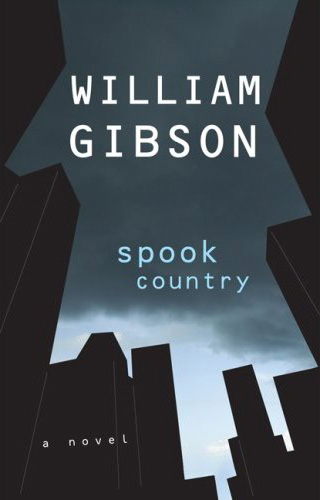 Given the depths to which sci-fi fans take their fandom I was quite surprised by the less than heaving turn out to the Toronto launch of William Gibson's new work Spook Country at the regular This Is Not a Reading Series! hosted by Eye Weekly, one of the free cultural weeklies you find scattered all over the subway. It's the sort of paper you pick up about five different copies of every edition, dumping them once done an article and fully confident one will be awaiting you at your cubicle once you hit work the next day.
Most of those present were in their thirties, bald heads and thick black rimmed glasses alongside the minor presence of Gothic sorts, really the only markers of what you may expect from a crowd attracted by Gibson. Gibson himself was older looking than I'd have imagined, coming out with that sort of hunched over walk that suggests both the onset of age and the perils of spending too much time slouched over a keyboard.
For an interview session aiming to get at the "how and why of the creative process" of writing a novel Mark Askwith couldn't have asked less probing questions. All the same Gibson let us in on his lack of secrets, staring at a computer and bidding his fingers to write with absolutely no idea of where his new novel would eventually take him before finally settling on "glimpses of lower Manhattan at night" that quickly needed populating with characters.
From the chapter he read Spook Country follows a theme similar to Pattern Recognition, its a post modernist detective thriller about a journalist on a quest to piece together the developing art of using GPS technology to create digital images mapped against geography. One such moment has an installation hooked into the Iraqi Body Count website that projects crosses representing deaths in Iraq over the American landscape. A former military technology, only relatively recently released to the public use, GPS certainly provides enough for a Gibson plot and a typically odd bent on technological history to wrap itself around.
More of the interview came to focus on his own use of technology, how he apparently writes with "Google on" - as if permanently mining it for data that he conducts into his work, like some computer age muse. He dismissed these visions with the anecdote of his friend Bruce Sterling who found it impossible to write unless he had an old TV switched to MTV resting on top of his computer monitor, a stereo tuned to talk radio and then a set of ear phones blaring music to him - distraction as concentration can take many forms. Analog, digital, same shit - Google however is something that may quickly become a "universal prosthetic memory."
Only rather late into the evening did the topic turn to the obvious, why in his recent works has he dropped the visionary aspect of his work to engage in his new style of "speculative presentism," something that brings the sci-fi lens to the everyday of modern society, looking at how our technology is affecting us now. According to Gibson this goes right down to the root of how he grew up understanding sci-fi: "as about the day it is written in. If you read sci-fi in the 1930's it is so clearly about the 1930's... I had this as a given when I started writing sci-fi."
A rather obvious answer alright, and he articulated it further by saying "the weirdness of the present is the thing sci-fi is most suited to explore." A lot of this recent change as well come down to Gibson calling himself on his own answers to interview questions, after attesting for so long that if he was writing about the present he would use the exact same style - he simply set about doing it.
Where most critics see Neuromancer as a bleak commentary on forces that were articulating themselves in Reagan's America, Gibson himself gave a surprisingly different reading of his classic fiction, seeing it as "committing an act of almost ludicrous optimism as most of the intelligent people I knew did not want to bet any money on any of us being here in 2007 because of the postures of the United States and the USSR."
He elaborated on how Neuromancer was really his view of the obvious, of how the insanity of the Cold War couldn't be allowed persist by capital, after a very brief and limited nuclear war in his dystopian vision corporations intervene to quieten the nation state, he extrapolates "to kill the middle class, fast forward a couple of years and the result is Mexico city, North America set in Mexico city." In his view Chiba city is a far more appealing place to live than contemporary Darfur, at least there you can entertain visions of becoming a cyberspace hacking cowboy.
He was pretty modest too, owing much of his recent technological accuracy to Boing co-editor Cory Doctorow, and moving onto advocating a blogging style he himself seems to use relentlessly with no comments and just links. Everything else is superfluous it seems. His approach to music was also touched on, the one thing that allows him to "round characters, even societies more convincingly if I can invent convincing musics that they are listening to...music gets to a character's interiority and exteriority equally."
Labels: Literature, Sci-fi, william gibson
(0) comments
Wednesday, August 15, 2007
A System That Lets People Live In Shit
 A Review of Planet of the Slums (Verso 2006) by Mike Davis.
In the mega-cities of the global south, massive slums and squatter settlements have shattered modernity’s optimism with an unprecedented Dickensian squalor - now for the first time in our history the urban population of the earth outnumbers the rural. Planet of The Slums is Marxist belligerent Mike Davis’ attempt to map our world's breakneck urbanization and the impact of this watershed.
Historically he explains how once European colonialism resisted urban migration with its threat of fostering an anti-imperialist solidarity straight out of the Battle of Algiers, but now there is a staggering 400 cities with a population of one million while in 1950 there were only 86. Famine and debt, civil war and counter insurgency were the most "ruthlessly efficient levers of informal urbanization" in the fifties and sixties. Then from the seventies IMF structural adjustments tore away even the dream of third world states’ playing a role in housing provision.
As the most dominant alternative to public housing we Davis runs us through a topology of slum forms. Presented with the familiar “hand me down” of western inner city housing, the pirate urbanization of squatting and renters in invisible property markets. Finally we are confronted with the nightmarish figure of the permanent refugee camp such as Gaza on “the pariah edges” of the mega-city.
In Davis’ view, the very organization of these urban spaces has become a theatre for the play of class; sometimes its beautification drives; sometimes criminalisation. Poor people dread international events such as the Seoul 2008 Olympic games, that justify land grabs and mass evictions. Using criminalising myths that obscured their potential as resistance centres, Argentina’s generals determined to destroy the villas miserias of Buenos Aires on their return to power in 1976.
Davis explains that the class politics of urban space are best symbolized in sci-fi-esque“off-worlds” like Alphaville in Sao Paulo; heavily militarized private suburbs constructed by a super rich connected to global networks of wealth and ignorant of localized poverty. On the surface of the more mundane everyday, there is vastly differentiated access to simple infrastructure like roads and electricity - or statistics on who ends up dead in traffic accidents, predicted by the WHO to be the third largest killer of the poor by 2020.
The ecology of slums is a dangerous one too. Terms like “classquake” come to designate just who bears the brunt in natural disasters like Turkey in 1999 or man-made environmental disasters like Bhobal chemical plant. More metaphorically, in cities like Kinshasa with its population of 10 million and no waterborne sewage treatment, capitalism quite happily leaves whole swathes of humanity living in shit.
Snapping heavily at the “soft imperialism” of NGOs, Davis rushes on the failure of their talk of democratization, self-help and participation, to highlight how they diminish grassroots mobilization and increase corrupt elites. Tearing into market based solutions that celebrate “boot strap capitalism” and a small business led “transubstantiation of poverty into capital,” he describes how such ideology dissolves self-help networks essential to the survival of the very poor.
What bothers Davis most is how contrary to traditional visions of urbanization, capitalism has created “a surplus humanity” excluding billions from its labour markets and leaving them to an informal bare survivalism that defies traditional visions of class. In the absence of the left, Pentecostal Christianity and political Islam weave new social solidarities but the social technologies these religious forms leave often breed nihilistic terror. Of course there are other models such as the indigenous organizations of El Alto that provided the back bone to Bolivia’s resource wars.
As he explains in his conclusion, US military think tanks have their own take on this dose of neo-liberal reality, with crash courses in how to fight under slum conditions in an “asymmetric combat” that literally goes through walls instead of using winding streets. Haunted by this lurking counter-insurgent terror, Planet of the Slums merely provokes and prepares the reader with a preliminary over-view for Davis’ next project, with its promised leaps of scale between global warming, slum life and a future of resistance to capital.
Labels: Literature, mike davis, Politics
(0) comments
Friday, August 10, 2007
Vidiot: Call Centre The Movie
After starting a new job in a call centre I was pretty entertained to come across Call Centre The Movie, a short independent movie made I suppose, by some Indian Film makers - it strips away the telephone lines to look at life inside a fictional call centre in Delhi and the chaos that ensues when too many calls come in.
Driving along a similar vein I've recently added Chetan Bhagat's One Night @The Call Centre to my immediate reading list - it's the tale of a story told to a bunch of weary train passengers about romance, obsession and a phone call from God in another Indian call centre.
At the moment I am preparing a course on working class fiction for the Anarchist Free University in Toronto - you can expect a stream of posts on it - and am curious as to whether there is more fiction using call centres as a back drop, giving their massive role in the global economy at the moment - it'd be odd that fiction would ignore them, imagine a 19th century fiction without the mine and inner city poor. So I throw the floor open to you to fill me in, are there more out there?
Labels: anarchistu, call centres, Class, Film, Literature, Vidiot
(1) comments
Tuesday, April 24, 2007
Book Review: Distant Babylon
 Distant Babylon by Patrick Ryan belongs to a developing serial niche of Dublin literature arising from the devastation caused in inner city working class communities by the heroin epidemic of the 1980's and 1990's. The Dublin these mainly auto-biographical tales describe is unrecognizable when compared to the one we inhabit today. Lyder in Pushers' Out for instance refers to Thomas St as one of the biggest open air drugs markets in Europe, while drug dealing persists there it does so in the shadow of new apartment complexes and expensive cafes.
In the opening of his account of this older Dublin Patrick Ryan declares how he wants to records "the positive upsurge of collective aspiration of the communities...like a breath of fresh air that swept through the city" when a strong social movement emerged to re-occupy community spaces from predatory drug gangs, "vomit and urine stained stair cases" and create a world for their kids where games such as "pusher dealer, snatcher copper"could be an oddity rather than reality.
Ryan begins his tale growing up among shored up yet to be renovated tenements "brokers" and a liberal sprinkling of head bangers with an excited Dublin story telling wit that often runs ahead of itself with a demanding repetition. Ryan excels in charting the introduction of heroin to the inner city through the cider party scene and it is here he began "skin pricking" himself. Ryan was an addict for about two years before a bout of hepatitis forced him to get treatment. Not so long after he would be "caught" and placed into employment by the Gregory deal which he accredits with saving "more young men than anyone will remember."
The death of his father came over Ryan like an emotional catastrophe, one worsened by a needless police raid on the pub where his family were grieving. Throughout the book Ryan details the constant scrutiny of "the police as part of the furniture" in working class communities, where it is only "bad copper - bastard copper" and this experience comes to define his sense of class. The deeply hostile role of the police comes to the fore throughout his experiences of community activism as well, with the harrassment faced by Sinn Feiner Christy Burke and the media hounding of a local so-called "provo-priest" moving the author to some solid conclusions about powers inabilty to understand and accept community mobilisation from below, similar to Rossport "a picture was painted to make them look other than they were" facilitating criminalisation and clampdown.
There aren't many thematic differences with Lyder's book, although Ryan does recount some shocking attempts by well organised crime gangs to break the movement including one forty strong attack by a group of men he accredits with breaking the resilence of his group and destroying the community vision associated with it.
Eventually as the book moves on the prose becomes worn down and bloated, beginning with a trip to England where the author fantasises about facing persecution similar to the Birmingham Six. Stick in an awful page long ode to the "Prime Minister" Bertie and his "language of the people" and some of the most off the wall, ill-researched rants about soft drug use and Ryan manages to lose you before the end of the book. If you are reading it for its social history you won't be disappointed, just be careful Ryan's barbed analysis of the drug situation towards the end doesn't sicken you too much.
Distant Babylon by Patrick Ryan is on sale for €10 in Connolly Books on 43 East Essex Street, Dublin.
Labels: Distant Babylon, Literature
(0) comments
Wednesday, January 17, 2007
54 Tells the Story of Life in the Shadow of A Failed Revolution
 54 is written by the Italian Wu Ming collective (Mandarin for 'anonymous' and 'five names, depending on its pronunciation and perhaps most significantly, a nom de plume often used by Chinese revolutionaries), for their last book they were known as Luther Blissett an Englishman who used to play football for AC Milan. For those not au fait with the world of post-situ art hoaxers (for shame!), Luther Blissett is a nom de plume used by aforementioned hoaxers in the course of said hoaxing. Previous stunts under the same name (although not necessarily the same collective) include concocting a phony media scandal about a high ranking Italian cleric being involved in paedophile child smuggling ring and organising a bus hijack/techno party/riot with the cops through the streets of Rome. Their previous book, Q is an epic, it tells the story of the insurrections and peasants revolts that broke out in Germany and Holland in the 15th century, through the eyes of a nameless and wandering radical. The rebellions of this period challenged the authority of the feudal lords and the papal hierarchy which justified them; they turned religion against the Church, demanding an end to class society in biblical language. Q is a long story of rebellion, and inevitably its defeat, whether at the hands of the armies of the Catholic church, of the new Protestant elite, or those of a crazed and brutal demagogue.
If rebellion is the main story of Q, then its failure is the main story of 54. The book is centred around Italy in the year 1954, at the peak of the Cold War. The main character is one Robespierre Capponi, second son of a communist revolutionary and barman in the Communist Party Aurora bar in Bologna. His brother Nicola, who manages the bar, fought with the Italian anti-fascist partisans during the war and was permanently crippled by a Nazi bullet. The book opens during the war as the men's father, Vittorio Capponi leads a mutiny against his commanding officer in his unit fighting on the Yugoslavian front and runs off the join Tito's partisans. The war casts a long shadow on the rest of the book, as the old revolutionaries struggle to come to terms with the shallow victory that they have won. The revolution that they fought for has given way to a corrupt government propped up by the United States1, Mussolini is dead, but everywhere the fascists are being pardoned and are back in power while many of the former partisans are being persecuted. This failure, and how it's dealt with is one of the main themes of the book...review continues on Indymedia - Ronan McHugh.
Editors note: A lot of material on this blog links off to Indymedia at the end. The reason for this is because it is a site worth supporting with contributions and also due to its 'on Indymedia first' guideline, designed to eliminate cut and pastes spamming the site from elsewhere on the web.
Labels: Guest Blogger, Literature, Politics
(0) comments
Monday, January 08, 2007
Two Months In Print: From the Book Exchanges Or Not?
 The stalls may be bustling with Spanish language editions of Dan Brown sitting alongside The Art of War and Das Kapital, but the best you'll manage is to scan through a daily tabloid and come away with a faint understanding . Well thats the experience of an Spanish speaker in South America. This gives a weighted importance to book exchanges in hostels. Far from being bursting, divergent little caves of taste and interest, invariably they included two shelves of semi-erotic romance novels, spy-fiction in abundance and multiple out of date travel guides. Here's some books I got around to reading on my travels. You can judge what came from the exchanges and what came from ruthlessly rooting around markets yourself. In the spirit of 60 Seconds On Film here's some reviews. Rueeq had a similar idea and reviewed some of what she read, doubling up on some of the ones below and others.
Primitive People, Francine Prose This is exactly the sort of book that old adage on judging by the cover warns you against. A forceful, blurb bends you towards this supposedly, acerbic anthropological satire of American, middle class suburbia. This is Wisteria Lane as seen through the eyes of Simone, a Hatian migrant economically conscripted as "care giver" to the permanently crisis prone divorced Rosemary.
The authors finger is on the trigger when it comes to characterizing the shallowness of the upper middle classes, simultaneously wrapped in dilemmas about their own status, then flaunting it or trying to off-set it through New Age philosophy or exploring the artist within. Cringe inducing incidents provide the backbone of the humor, and then like one Desperate Housewives voice over too many it all becomes a little too tedious to bother finishing. Death in the Andes, Mario Vargas Llosa Llosa is a writer to make your spine tingle. In this delicate combination of love story and detective noir he crafts a modern horror relying in equal dose on the natural spookiness of the Peruvian mountains and the violence of Sendero Luminoso. The Senderistas become confused and intertwined with demons of the hills in this clash of rural/urban and furoe into the persistence of pagan belief among Andean peasants. The plot unfolds around a coastal city Civil Guard Corporal Lituma, who lands a rural out-post investigating the mysterious death of several laborers on a road-works.
It's a series of narratives within narratives, on one hand Lituma's lovelorn side kick interrupts the textual flow with flashbacks to his own romance with a former prostitute. On the other hand Lituma, tortures himself with imaginings of the bawdy drunken debauchery foisted on road laborers by Dona Adriana and her husband the mystic Dionisio who run a shanty roadside canteen. The ancient and modern collapse into each other, leading to a violent and iconically charged ending that immediately brings the Wickerman to mind.
From Gangland to Promised Land, John Pridmore Remember those secondary school afternoons when some lunatic with a history of drug addiction, mental breakdowns and violence held your class rapt with tales of his visitations from God? Yes well John Pridmore is one of these retreat running men. In Carlow one particular wild haired, former seventies rocker, a skillful story teller who noodled Zeplein on acoustic and warninged of their dalliance with satanic rites and the consequences on young minds. Pridmore never had such occult rock ambitions, instead he was a simple minded East-end bouncer with a short fuse. Pridmore successfully cultivates a soap opera hard-man on the downward spiral image, concoctions of drugs, women and lad culture take their toll and he first obsesses over some slight on his pub pride and then batters some kid near to death.
Mid way through his court case he of course turns to God, replacing a set of voices in his head with just the one. Amble on through a series of adventures in the poverty industry, where Holy John used his tough boy exterior to break down walls between youth and social workers and its all pretty much wrapped up until celebrity status strikes through the Youth 2000 campaign. There are some truly disturbing moments described as he sails through school retreats. One such class weighed heavy due to the presence of visibly upset and distant girl. In private Pridmore advanced towards her and told her the reason for her state of mind,as God had put it to him - serial childhood sexual abuse. If you want a picture of the mentallers still being dragged into our schools to shore up the moral fiber of our teenagers in religion classes, here's your start. You couldn't even begin to make this bollox up.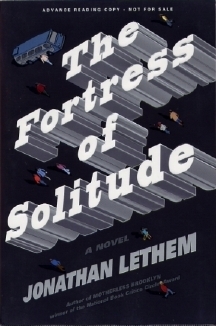 Fortress of Solitude, Jonathon Lethem One of the more brilliant novels to fall into my hands recently, but this loses its glittering attraction towards the end by eschewing explorations of the 1970's Brooklyn tagging and hip-hop culture for the personal trauma of growing up white in a black neighborhood. Though disappointed by the ultimate direction of this novel, it'd be foolish not to recognize how Lethem has made the area of racial tensions and its contribution to pop culture his particular area for mining anecdotal recalls from the very recent modern.
He builds up a plot around the shared mutual love of DC Comics, hip hop and robbing spray paint between two boys, one white, one black. That these two kids would take such dramatically different paths in life is an testament to the strength of racial separation in the states today, despite the mainstream acceptance of predominantly black cultures. Brooklyn breathes all over this book, you can be of no doubt that Lethem was inhaling its air as he produced the detailed accounts of building gentrifaction beginning with the '60's counter culture and then how crack first began to take hold in the projects.
History of Argentina in the 20th Century, Luis Alberto Romero Going by the Evita Museum and others in Buenos Aires, after the dictatorship came to power - it without reason dug up the first lady of the Peronista movement's corpse. The gaps between what most national history museums tell you and the reality of a country's politics is the reason you rush out and buy a book like this to fill in the blanks yourself. Romero has produced a book that does extraordinarily well on the undergraduate circle, its constant status as an instant reprint has led to more recent updates to cover the dramatic neo-liberal restructuring under Carlos Menem and the more recent uprisings from 2001 on.
Basically its a dry, academic history of Argentinian presidencies and their economic polices, the complexity of social movements are really only explored when they pierce out of and briefly push aside state hegemony as in the late 1960's and again in the late '80's and 2001. Though for an account of the social movements readers are best pushed off to reading the contemporary accounts the author himself will likely end up relying on for future updates. Romero successfully manages to give the new comer a grounding in the emergence of Argentina as a distinctly European South American city, his coverage of the Juan and Evita Peron movement, which in itself stands as a good basis for moving on to other periods while the corruption within the ruling elites is pleasantly left wide open for consumption.
 Wild Swans, Jung Chang This piece of history from below has probably sat on most book shelves since the mid-1990's, when it first had accolade after accolade thrown on it for its emotional detailing of the lives of three daughters of China. Its brick shaped size has put many off, but don't be afraid. What Chang has managed to do is create a highly engrossing account of three periods in Chinese history, from the period of war lords and Japanese occupation, right through to the civil war between the nationalist Kuomintang and the communists and then the most dramatic period of all under the stewardship of Mao and the cultural revolution.
At its best Wild Swans details the effect different forms of political hegemony had on the internal life world of the Chang family. The most astute renderings are the descriptions of the lives of women during the three periods, from the concubine existence of her grandmother and her struggle against it to her own mothers development as a communist as a slap in the face to the reactionary feudal system and its prescriptions on women. Wild Swans is a fantastic entry point to Chinese history, but the author's bleeding heart eventually becomes tiresome as you realize the gap between her parents sufferings and her own privileges.
 My Century, Gunter Grass There's a name that rings familiar, you associate it with terms like "intellectual tour de-force" or the obscurities of German left-wing writers. A lot is riding on it when you come across one of his books for the first time. My Century is an unusual novel, it rolls through what Eric Hobsbawn called "the century of extremes" in a series of personal tales told by 100 different voices for 100 different years. The years of the Great War are recalled by the hunched over authors of several war classics from a perch of four decades later, while the twenties and thirties are marked by the social crisis of German society between the struggling forces of Communism and the fascist response to working class organization.
Overall as this landslide of voices tumble down around you Grass presents a multi-faceted, overview of the complex questions that feed into the construction of contemporary German national identity which dominates the novel from the 1960's on and emerges strongly again in the era of re-unifaction. To be honest, that Grass received the 1999 Noble Prize for literature for this novel says more about the pre-millennial love for count downs than his writing talent.
Labels: Irvine Welsh, Literature, South America, Travel
(0) comments
Friday, October 06, 2006
Book Launch: Clandestines: the Pirate journals of an Irish Exile
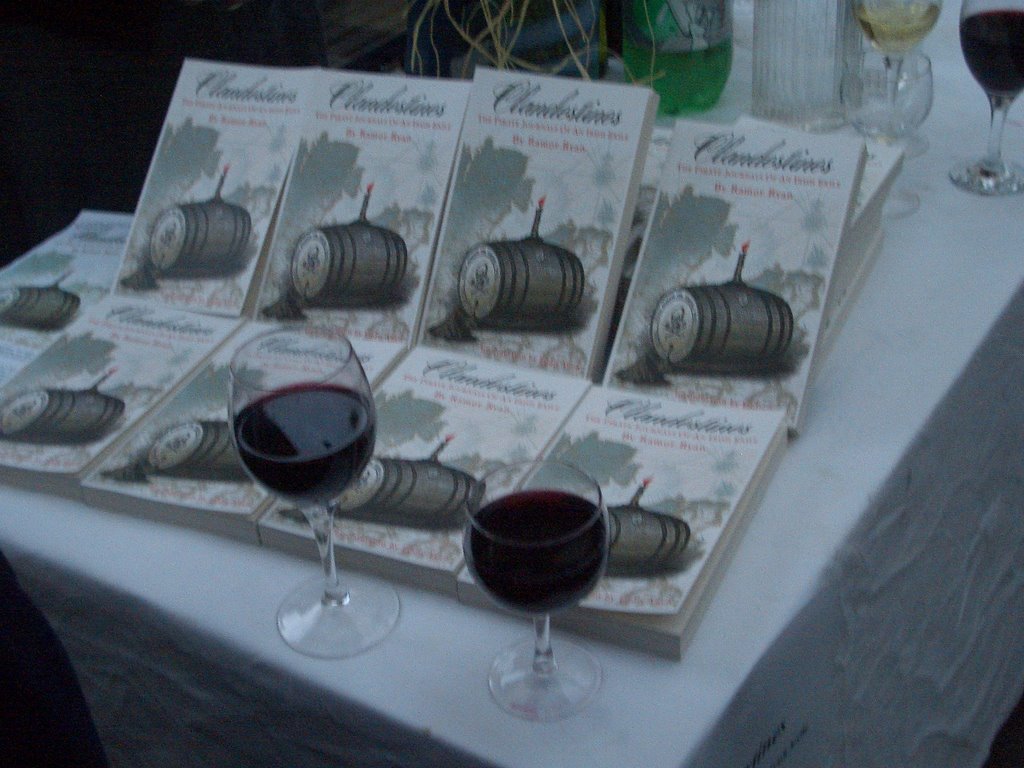 Over the past number of years there has been an emergent cannon of anti-capitalist literature providing polemic and analysis aimed at undermining the comfort zones of late capitalism with ripostes from its rebellious borderlands. This literature verges between two forms. There is the sometimes arid academic style shaping tomes on anti-capitalism as a new social movement. Then there are other compendiums that collate smaller pieces from the movement themselves in collections that inevitably end up sitting on undergrad reading lists or bookshop shelves in easy reach of a broader audience.
This is a very Irish book in one way, written by an exiled anarchist faced with immigration who opted for global political hot spots over the building sites of London or the dole queues of Dublin. The Temple Bar Gallery in Dublin played host last night to a book launch marking the latest addition to this world of anti-capitalist imagination. Ryan's Clandestines: the Pirate journals of an Irish Exile seems to be a book that infuses a stringent lived passion for revolutionary change with his own broad theoretical sweeps and political musings. In this way it clearly echoes the whimsical mental and physical travels of Naomi Klien's Fences and Windows, but takes a far more personal and biographical tone. From quickly glancing over it, Cladestines is composed of a series of easily digestable vignettes taking the reader from the squat scene of East Berlin, to armed struggle in Kurdistan and an eyewitness account of Michael Stone's murderous rampage at a republican funeral in '88. These primary tales represent the formative years in Ryan's growth, but are quickly eclipsed by his journeys in the new world of South American radicalism. The blurb on the back describes the novel as a Che like travelogue dripped in the sped up flair of Hunter S. Thompon's gonzo adventures and as such is one definitely worth adding to the reading list.
Unlikely to recieve much of a popular release, Ramor Ryan's Clandestines: the Pirate journals of an Irish Exile will be on sale in Anthology Books in Temple Bar and directly from AK. There will also be a reading from the book by Ramor courtesy of the Trinity Anarchist Society entitled From the Berlin Blacbloc to Zapatista Zones, it starts at 7:30pm on Wednesday, October 19th in room 4050b.
Links to some more of Ramor's Writings: We Are Everywhere | Confronting Capitalism | Days of Horror Nights Of War | More online pieces | Longer online review by a WSM comrade
Labels: Indymedia, Literature, Ramor Ryan, Social Movements, South America
(0) comments
Saturday, August 19, 2006
Library Thing and Bad Books.
 The Irish blogosphere is awash with people posting pictures of their bookshelves on the net this week. Given the high levels of procrastination I am prone to, any new internet fad is met with welcome arms, and now you can browse my virtual book shelf in the making too. Its worth asking the question, is this one among many of the pleasurable vanities the net opens up for us to indulge in? Library Thing sounds exactly like the virtual equivilent of leaving that unread tome on the coffee table to silently impress your friends. Until there is a greater conformance in handheld technologies offering the chance to share digitally ripped books, I can't see paper copies becoming redundant anytime soon. Neither can I see hard backs being downloaded over Soulseek for a quick toilet seat reading session. I hope Library Thing represents a genuine opportunity to further community, as those within a relative geographical vicinity of each other are now presented with the opportunity to swap and share books. But will they use it? Like most of these burgeoning online network that attempt to stumble off line, I'll relinquish holding my breath and await the hactivist liberation of Google books or Questia. Where once we browsed through libraries, we now secretly perve through other's virtual book shelves in trepidation of asking a lend.
Meanwhile in the real world and at the opposite end of this fragmented and individualised reading experience is Bad Books. For over a year now, a group of Dublin activists have been struggling to find a place to rent in Dublin to open an space and meeting point for artists and activists. Recently the Seomra Spraoi collective behind the idea, opened their new autonomous space and in doing so have provided a home for the itenerant Bad Books libray and the Forgotten Zine archive. The Bad Books library was started back in the heady days of the Magpie Squat on Leeson St. A library was set up, membership was on the premise of donating three books and you are in. Complete with its own unique libray membership cards held by assorted anarchists and alternative types, the library thrived before the squat was evicted, leaving over 500 books and 1,500 zines homeless. Temporarily given shelter in the Unawarehouse on the Nth Strand, the books and zines now have a new home in the centre of town. Carrying mostly rare, expensive and hard to get books of cultural criticism, political theory and histories from below, the new home provides an opportunity for more people to donate some of those books providing a dusty intellectual aesthetic to your hallway to a place where they'll be cherished and used.
Bookish types may be interested in a special sale to raise cash for future projects over on Autonomedia. Linked for years to Semiotext(e), both publishers have been central early conduits for translations of radical continental philosophies to English. In the early days this meant Baudrillard and Delueze, now it means Negri and Federici. From breifly checking through the highlights, I recommend Cracking the Movement, just back from Amsterdam myself and rearing to get into this highly commended account of the early days of the contemporary Dutch squatting scene for some hints towards its now declining role. Caliban and the Witch is equally worth a look for a heady combination of a queered up feminist theory, that seeks to contextualise the meanings given to the female form within its reproductive use for capitalism. They also maintain the excellent Interactivist Exchange, a visit once a day is gauranteed to keep the Sky News blues away - trust me. And after that if you need a free bookshelf you could do worse than browsing through Leinster Freecycle for the pine book case I spotted this morning.
Labels: Internet, Literature, Seomra Spraoi, Zines
(0) comments
Sunday, April 09, 2006
The 30 Second Bookviews Of A Wanderer
 Homage to Catalonia George Orwell - When asking Anthrophe if this would be a good book to take with him, he sat up suddenly, said that I should drop everything else, read this one first and write a 2000 essay on how it changed my life. So I did, well not the essay part but I did read it first and really its a personal account of the Spanish Civil War. An example of anarchy in action. And you can see the roots of where 1984 and Animal Farm came from. If I was younger and didn't already know about the Spanish Civil War and politics I could see how it could "change my life". So I suppose I could write a retrospective essay. In the end it entered my subconsciousness and started having dreams about being coined a communist and having to go into hiding.
Animal Farm George Orwell - I got this book in Lunag Prabang when I traded in my scuba diving book that I had no use for and which apparently has no value outside the islands. The question might be why have I not read this before, the answer to that includes families, gender prejudice and teenage angst. Its a simple book, screaming absolute power corrupts absolutley and begging people to fight for anarchism. It did encourage me to buy Burmese dreams go continue my George Orwell and South East Asia theme, but alas by the time that became a possiblity I was stuck into cyber punk novels.
Sex Slave; Traffiking of Asian Women Louise Brown - This book is just badly written. Really this woman has all this knowledge and information and she wants to get it out but what ends up happening is a spewed mess that repeats the same point through examples of a dozen countries. If you want to find out more about the sex industry in Asia I would suggest starting from her bibliography but giving this book a miss.
GB84 David Peace- This is another book that Antrophe suggested I bring, this time I didn't listen to him (mainly because the book was to large to drag around for two months.) But the second island I was on had it in their library. WARNING it can seem confusing to start off with. Its a historial fiction about the Miners' Strike. I actually really enjoyed the confusion of it all, you have a diary entry of an average joe on one side of the page then a novel who's chapters are split into weeks of the strike. You end up flipping back and fourth alot trying to get it all in. I left this book half way through since it still was too big for me to drag around and secondly because it really started to bring be down . . . corruption, money - power - control. I read it dirrectly after Homage to Catalonia and started to be sick of human behaviour in general. I will pick it up and finish it now that I am home and don't need to drag it around.
The Princess Bride S. Morgenstern - Classic. For all those who watched and loved the movie as a kid, this will bring back the greatest memories and let you hear Vizzine lisp "INCONCEIVABLE" in the dialogue in your head and it makes all your adventures a bit more fun, the crazy cliffs that you kayak past become the cliffs of insanity. Classic.
Pattern Recognition William Gibson - William Gibson is said to be the god father of cyber punk novels. This is a more recent one of his that I would say he has not lost his touch. You will be infatuated with the main character unsure if you want to be with her or be her. The discriptions of London, Tokyo and Moscow are brilliant along with the internet message board world. Its a gate way drug to the cyber punk world.
 VURT Jeff Noon - Yet another cyber punk novel. Dealing with drugs, dreams, virtual reality, love, sex and fighting cops. Jeff Noon takes you to the world of the Vurt filled with robodog, shadowgoth, robocrustie, pures and many more. This book will take you a bit longer to read then the average novel but really its worth getting your head around the stash riders world.
Around The World In Eighty Days Jules Verne - Mud traded something to get this. I felt through out the book that I was going to be asked to write an essay on how the British colonists viewed the orient and the other. The discriptions of cultures and places were so full of arrogant sterotypes. Yet its a great read to have when you are traveling. Any time you are taking long journeys of trains, boats, buses etc, you can always say Phileas Fogg would have been proud. It started an adventure reading tread for Mud. Which resulting in her naming her dragon (the one that would accompany her on her adventures after I left) Jules.
The Da Vinci Code Dan Brown - Ok there was this couple that saw me reading The Princess Bride and got all excited, they wanted to know if they could trade it for some classic after I was done. They were all cute about it. The guy had never read it before and the two of them were going to read it out loud to each other. A few days went by and we never say them. We had given up on the trade untill we ran into them agian on the way to Bangkok. We gave them the book happily only to discover The Da Vinci Code was all they had left to trade. I had avoided reading this book for years, since EVERYONE plus your grandmother has raved about it. It felt like reading the subtitles to a Hollywood film. Don't get me wrong the female goddess stuff was interesting and made we want to look at paintings in a new way. But nothing has screamed block buster to me like this before. So wait and watch the film, its on its way out.
The Plough and Stars Sean O'Casey - This is an Irish play that created mad controversy when it first came out. Its a critique of the Easter Uprising. Basically saying that it was out of touch with what the working class people wanted. Its a realist play and blatently says what it likes. And really a nice touch of Dublin while you are away.
Heart of a Dog Mikhail Bulgakov - This book was lent to me by Doc, saying it was a good travel book. Its a parady of the Russian Revolution. Very weird, very good. But it did make me start to wonder about my book choices.
Parody/discription/analysis of revolution: 5/11
Books where animals stand up like humans: 3/11
That means more then 25% of the books I read had dogs or pigs walking around like humans.
Labels: Literature, Travel
(4) comments
About Soundtracksforthem specialises in iconoclastic takes on culture, politics, and more shite from the underbelly of your keyboard. A still-born group blog with a recent surge of different contributers but mainly maintained by James R. Big up all the contributers and posse regardless of churn out rate: Kyle Browne, Reeuq, Cogsy, Chief, X-ie phader/Krossie, Howard Devoto, Dara, Ronan and Mark Furlong. Send your wishes and aspirations to antropheatgmail.com
Label Cluster
In no certain order...
Politics,
Guest Bloggers
Interviews,
Music,
Internet,
Guest Bloggers,
Travel,
Blogging,
TV,
Society,
Film,
Gig Reviews,
Art,
Media.
The Neverending Blogroll
A Womb Of Her Own
Arse End Of Ireland
BlissBlog
BBC One Music Blog
Blackdown Sound Boy
Buckfast For Breakfast
Customer Servitude
Counago & Spaves
C8
Candy PDF Mag
Guttabreakz
House is a Feeling
Homoludo
Infactah
Indymedia
Indie Hour Blog
Jim Carroll
kABooGIE MusIC
Kid Kameleon
Kick Magazine Toronto
Libcom
Matt Vinyl
Modern Cadence
Mongrel
Nialler9
One For The Road
Old Rotten Hat
Pitchfork
Salvo
Spannered
Sigla
Test
Thumped
Newish Journalism
TV Is Crying
Uncarved
Una Rocks
Urban75
Weareie
WSM
Wooster
Village Magazine
Radical Urban Theory
Archives
February 2002
October 2002
April 2003
September 2003
November 2003
December 2003
January 2004
February 2004
March 2004
June 2004
September 2004
January 2005
February 2005
March 2005
April 2005
June 2005
July 2005
August 2005
September 2005
October 2005
November 2005
December 2005
January 2006
February 2006
March 2006
April 2006
May 2006
June 2006
July 2006
August 2006
September 2006
October 2006
November 2006
December 2006
January 2007
February 2007
March 2007
April 2007
May 2007
June 2007
July 2007
August 2007
September 2007
October 2007
November 2007
December 2007
January 2008
February 2008
March 2008
Gig Review: The Fall Tripod
Gig Review: Gogol Bordello
Broken Pencil Gets It's Irish On
Fecking Civil Servents
Fake Pharma Ads
Vidiot: Data Entry
Life and Debt
Last Night Cosmo Baker Saved My Life / Hip Hop His...
Eye Candy: Dufferin Hoarding Gallery
Review: Heads for the heart of the Sun – The Welco...